The world, turned into a magazine. If you had to put timespace ZINE's vision in one line, that's it. Or you could say it differently: making the city readable.
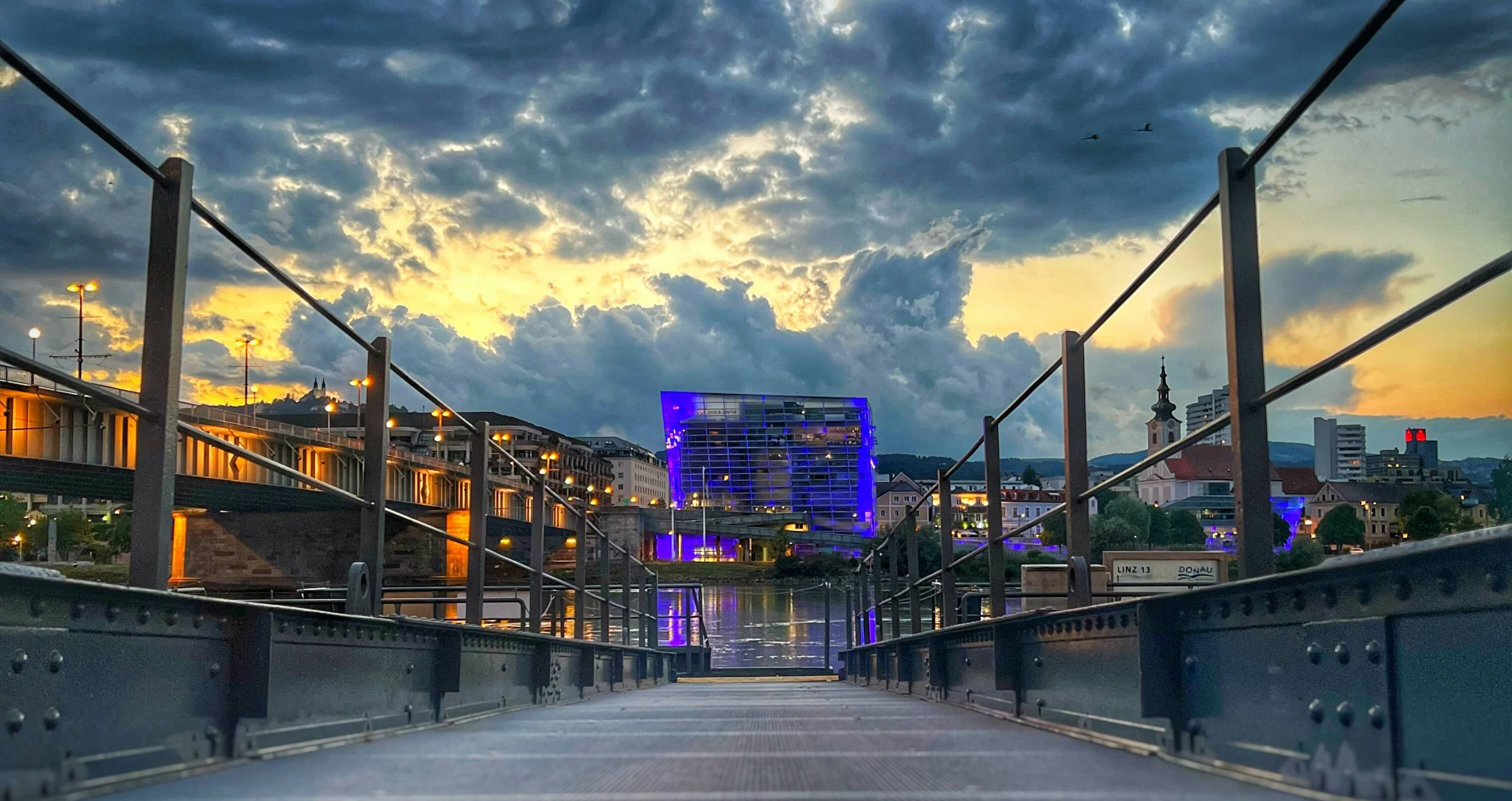
The project we're about to run—guerrilla-style, on the ground—at this year's Ars Electronica Festival in Linz is exactly that: reading Linz through AI, and treating whatever glimpses of "signs of the future" surface there as new questions, to be read together.
How well-known is Linz, actually, as a city? I'd always been drawn to Ars Electronica, had wanted to go someday. More than Vienna, honestly. But I'd never managed to build a concrete project as a reason to go.
So—how does a reason to head toward a new city even come into being? My own base in Japan is Kyoto. Today, Kyoto carries no shortage of reasons to visit. A world-class tourist city, a cultural city. The reasons people actually come here vary wildly. A family I happened to meet on the Philosopher's Path told me their main motivation was wanting to eat Japanese curry.
My reason for going to Linz started with Ars, plain and simple. But when I went in July to do research, it turned out to be a city with far more reasons to visit than that.
Kepler, Doppler, Mozart, Bruckner, Schiller—giants who left their footprints there—but also Roman ruins, carried through the Middle Ages into the present, layer upon layer of cultural heritage. Fragments of it are embedded all over the city, and just tracing those fragments alone was genuinely fascinating.
And standing there, I felt again, more clearly this time, the significance of Ars Electronica's existence—the way it tries to re-edit the accumulated weight of that historical memory into a question aimed at the future, across the whole city.
This project doesn't want to lock that into a single theme or a single pattern of questioning. It's a challenge aimed at connecting, instead, to each person's own individual premonition of the future.