.jpg)
There is a sense in which we live for those moments when we discover something we never knew before.
Something that meant nothing to us yesterday suddenly takes on meaning.
A familiar building becomes layered with an event from a hundred years ago. A seemingly ordinary street name reveals the life of a person behind it.
For moments like these, we open books and travel to unfamiliar places.
But can we search, on our own, for something we do not yet know?
Probably not.
Because searching requires a question.
Search engines are incredibly powerful.
If you can put what you want to know into words, they can tell you almost anything.
But you cannot search for something whose existence you are not even aware of.
What we do not know does not sit in our minds neatly labeled as "unknown."
It has not even become a question yet.
So if we truly want to encounter something beyond the boundaries of our awareness,
we need something between ourselves and the world.
Looking up at a sign by chance in an unfamiliar city.
Someone casually sharing an aside in the middle of a conversation.
Picking up a book from a shelf that you had never intended to look for.
New discoveries are not always things we go out and find.
Often, they are things that arrive from the other side.
Something outside ourselves brings us a question we could never have come up with on our own.
In that sense, discovering what lies beyond our awareness
requires a third medium.
And AI is uniquely suited to become that third medium.
A sign can only tell you what is written on it.
A person can only tell you what they know.
AI is different.
It does not have to receive a question.
It can receive the scene itself.
You do not have to ask, "What is this building?"
You do not have to think, "What kind of history does this street have?"
You can simply give it the world in front of you.
What matters here is not that AI knows a lot.
It is that AI can draw questions out of the world in front of us—
questions we could never have formed ourselves.
With a search box, you give it words.
With timespaceZINE, you give it a scene.
Scan is the gateway.
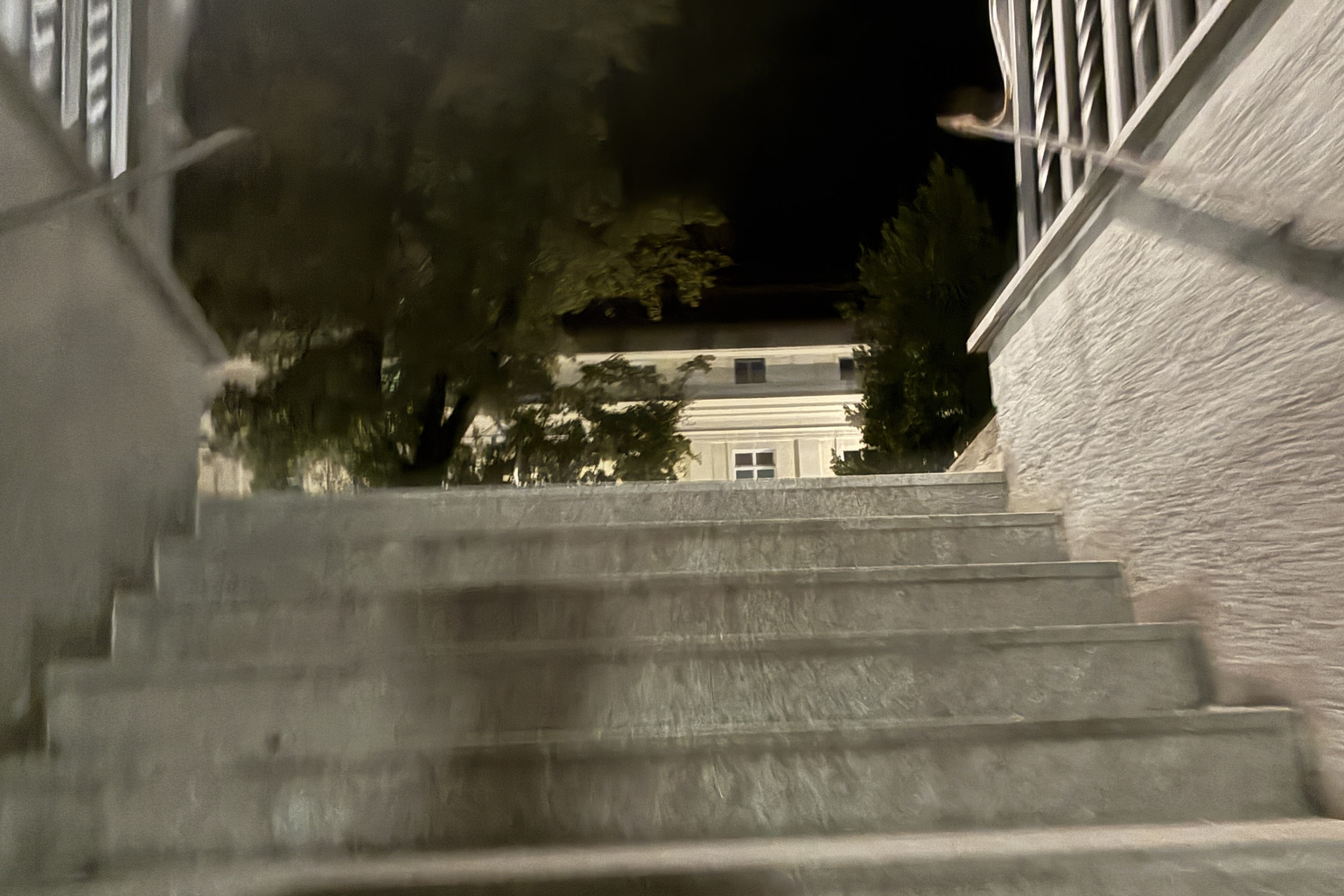
You do not take a picture because there is something you want to look up.
Something simply caught your attention.
You paused for a moment.
You happened to be there.
That is enough.
To Scan is to cut out a fragment of the world
and ask through it, instead of typing a question.
That is why timespaceZINE does not ask its users, "What do you want to know?"
Because we want discovery to begin before you even know what you want to know.
Scan the scene in front of you, and the histories, people, cultures, and events hidden within that place begin to emerge.
They may not be things you would ever have thought to search for.
In fact, we hope they are things you might never have searched for in your entire life.
timespaceZINE is not trying to make search more convenient.
It is a medium that delivers something from beyond the question
to people who do not yet have one.
When something catches your attention, try scanning it.
The scene in front of you may be connected to far more than you ever imagined.