Stepping Out of the Algorithmic Feed and onto the Street
Share a link on social media or display a QR code, and information circles the globe in an instant.
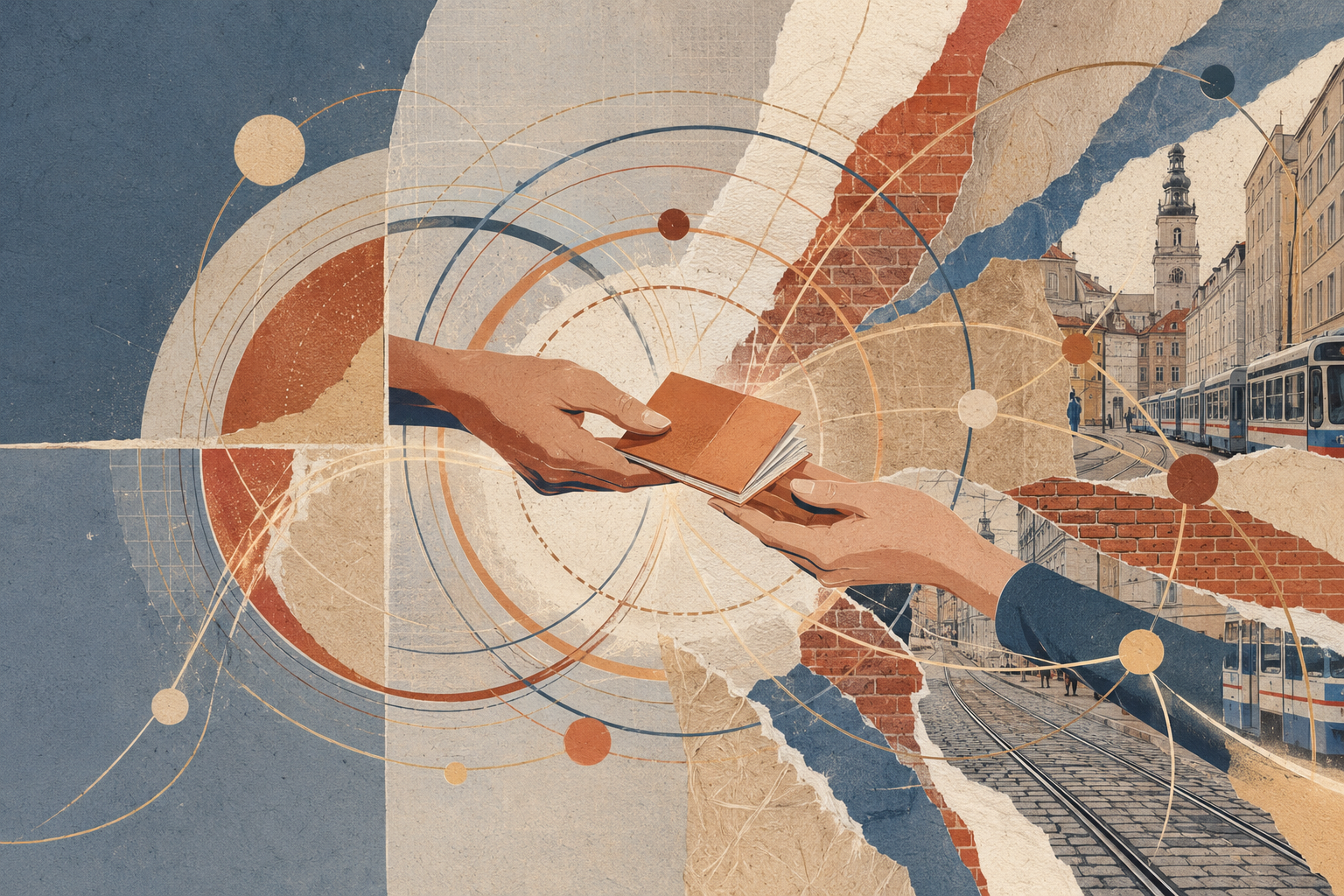
Why, then, do we stand on the streets of Linz, Austria, handing out freshly printed paper ZINEs limited to just 100 copies a day, one by one, directly into people’s hands?
While digital exchanges are undeniably efficient, they are frequently filtered, optimized, and homogenized by algorithms. Looking passersby in the eye and handing them a physical publication is our deliberate step outside the digital timeline—an attempt to spark spontaneous, warm, human-to-human connections.
Not a Handout, but an Invitation to Inquire
As the communicator responsible for on-the-ground dialogue and distribution, my utmost priority is ensuring these ZINEs are never treated as mere promotional flyers.
Placing a physical paper publication into someone's hands acts as a gift—an open invitation to begin a conversation.
The tactile weight and texture of paper at the moment of exchange naturally open up space for dialogue. We are not there to recite scripted explanations. Instead, we pose open questions:
“Seeing that alleyway or sign featured in today’s issue, how does it shift how you view Linz?”
“What is an unnamed charm or oddity you felt while walking these streets?”
“If you ran this editorial system in your home country or hometown, what local stories would you choose to edit?”
The goal is to gently challenge their perspective and draw out their own memories and personal interpretations of the city. More than a simple messenger, my role as communicator is to act as a catalyst for deeper dialogue about how we read urban spaces.
Street Dialogues Rewrite Tomorrow’s Pages
The words and energy shared through these street encounters do not vanish into thin air.
“A local researcher just shared an untold history behind that building.”
“A student passing by passionately detailed the old tram routes.”
These raw voices and field notes collected on the street are carried straight back to the Hp23 editorial room. They feed directly into that night’s discussions and shape new vantage points for the next morning’s fieldwork.
It is precisely this node of connection—handing over physical paper and exchanging words in the flesh—that keeps this 24-hour urban editing system running as an unbroken, living loop.
From a Single ZINE to a Global Network of Collaborators
Printed on the back cover of each ZINE is a pathway leading to the open editorial lab at Hp23 and our closing meetup.
Passersby intrigued by a brief street conversation end up knocking on our editorial door. Soon, they are raising a glass alongside creators and researchers from around the world, debating the future of cities and media.
“Why don’t we bring this urban editing infrastructure to my city next—Tokyo, Berlin, or beyond?”
Such rings of co-creation ripple out from a single ZINE handed over on a street corner. Because communication carries human warmth and a direct voice, we believe it can ignite genuine momentum capable of moving the world.