I'm a student studying chemical process control at Kyoto University, and at the same time, a co-founder of timespace, where I lead product development.
I met my co-founder, Iguchi, at the end of 2025, and in the process of turning our idea—that AI could transform how people make decisions while walking through a city—into something real, we arrived, after a fair amount of trial and error, at the idea for the ZINE app we're now bringing to Linz during Ars Electronica.
Before getting into what it actually means to "read" a city, I want to talk a little about why we found meaning in reading a city through the lens of a magazine—through editorial intelligence.
When I first moved to Kyoto, I was struck by something entirely different from what I'd known in Tokyo. Kyoto is a city that feels like it's already been told, exhaustively, from every angle. And yet I found, underneath that, a kind of exploratory interest that never quite resolves into a fixed narrative—one that's different for every person.
The decisions people make while moving through a city carry near-infinite possibility. In a city like Kyoto, with a thousand years of history behind it, shifting your path by a single alley can generate an entirely different permutation of experience.
This isn't so far from the sensibility of my own field, chemical process control. Inside a plant, changing how far a single valve opens—even slightly—can shift the behavior of the entire reaction system. The number of parameters isn't large. But the combinations they produce are, for practical purposes, infinite.
Kyoto's back streets work the same way. Turn right or left at an intersection. Walk at this hour or that one. Alone or with someone. The variables are simple, but the combinations they generate—the Kyoto that belongs to no one but you—are, in effect, infinite.
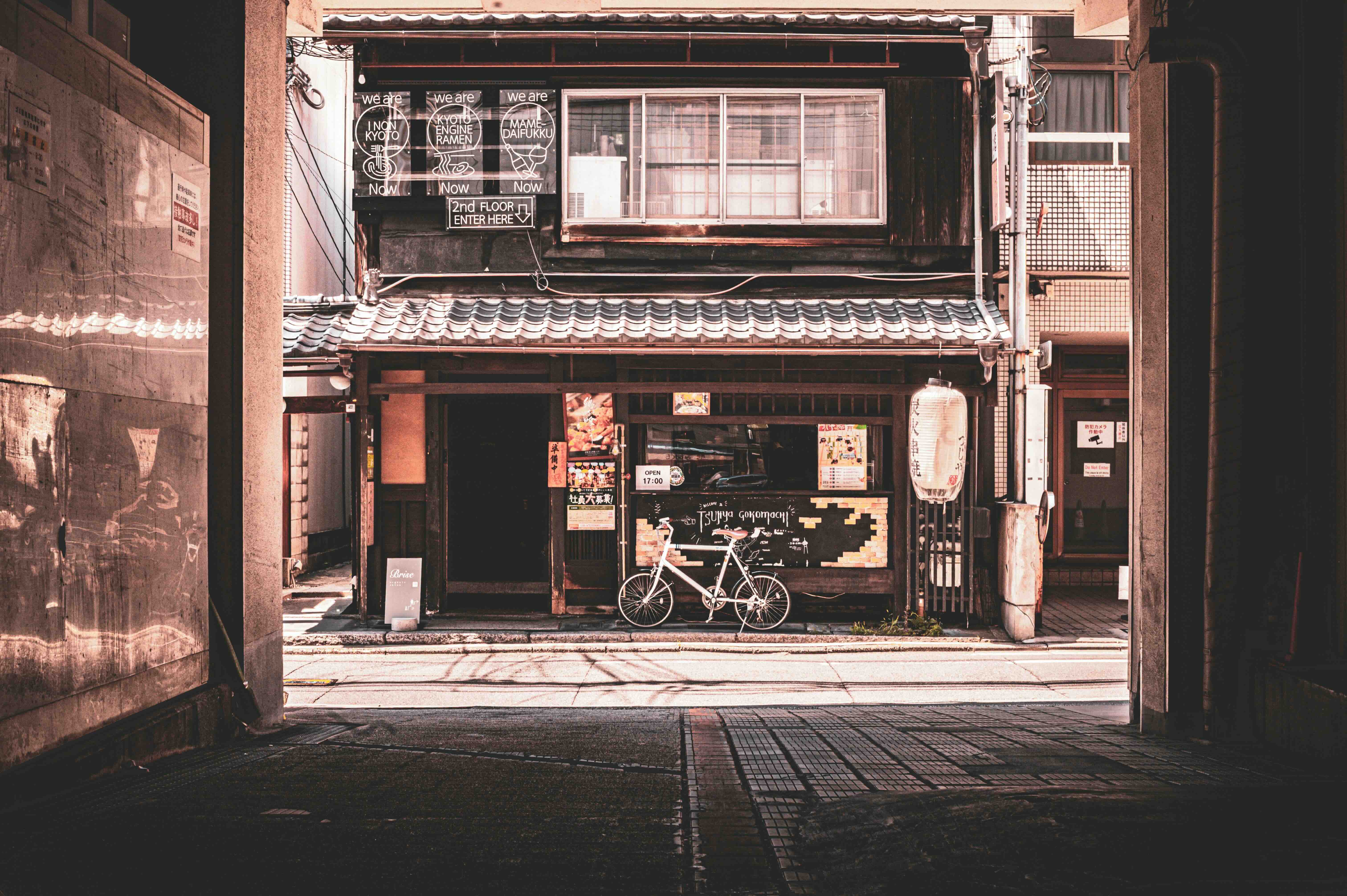
Guidebooks take that infinity and hand you exactly one predetermined "correct" route. But what actually surprised me in Kyoto were the places outside that route. An alley tucked just behind a famous temple. A small shop one street off the tourist path. Places that no one strongly recommends as a destination, and yet, somehow, stay with you.
The value of a place like that can't be explained by the place alone. It shifts depending on what time you walked there, what you'd just seen, who you were with.
The city isn't short on information. What it's short on is a way of connecting that information to itself. That's what led us to the magazine as a form.
A magazine carries an editor's point of view. What to select, what to place beside what, in what order to reveal it. That editorial act is what turns places that seemed unrelated into places that are, suddenly, related.
List Kyoto's coffee shops, and you get store listings. But bind together the shop a researcher used to frequent, the shop that inherited an old building, the shop where the morning light happens to fall a certain way—bind them under a single thread—and you get a small magazine for reading Kyoto's time.
The place stays the same. What changes is how the city looks, depending on how it's edited.