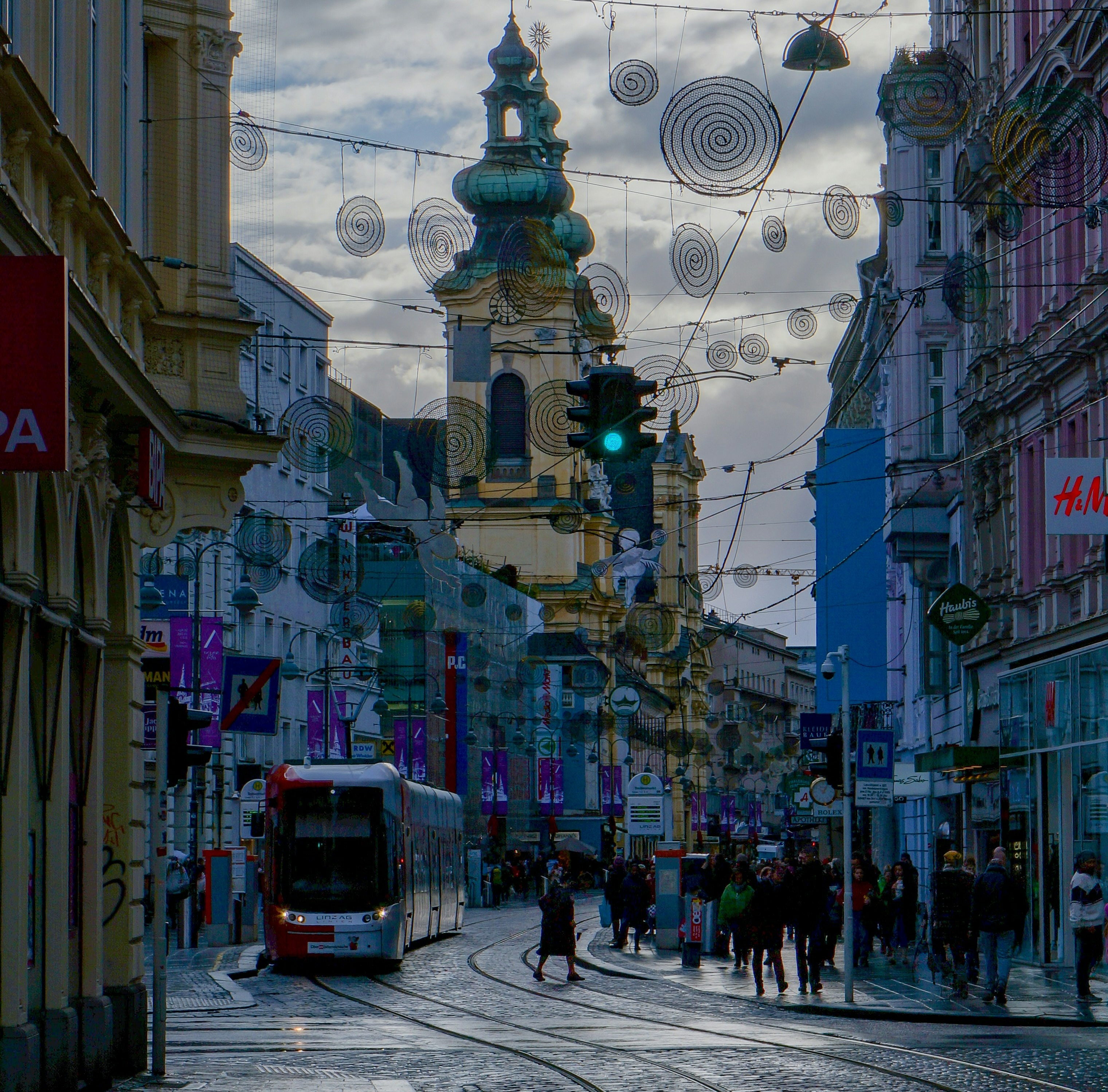
One month from now, during Ars Electronica in Linz, we'll be walking through the city, taking photos wherever curiosity leads us. A few seconds later, a small ZINE about that place will appear. That's the application we're building.
At first glance, it doesn't seem particularly difficult. Combine image recognition with a large language model, upload a photo, and ask, "Can you tell me what's here?" You'll get a convincing answer almost immediately. But that wasn't the application we wanted to build.
Our question was much simpler.
Is this something worth reading as a magazine?
That became our first engineering challenge.
AI can often identify what's in a photograph correctly. But it can also confidently invent the name of a building, assign the wrong date to a monument, or describe something that simply isn't there. If our goal were just to generate readable text, that might be acceptable. But that's not what timespace ZINE is about.
We want each article to become a small key for reading a city—to help someone look at an ordinary place and suddenly notice something they hadn't seen before. That only works if the foundation is trustworthy.
So we changed our approach entirely. Instead of asking AI to write an article in a single step, we broke the process apart: observe the photograph, generate questions, verify the information, cross-check for inconsistencies. Only facts that survive this process are stored in our knowledge base.
When someone takes a photo in Linz, we don't search the web from scratch. Instead, we retrieve verified facts we've already assembled and use them as the foundation for a new article.
It sounds slower. In reality, it makes the experience both faster and more reliable.
The breakthrough wasn't finding a smarter AI model. It was stopping ourselves from assuming that AI already understands the world.
A photograph is not a fact. It's only the beginning of a question.
Our goal isn't to build an AI that explains cities. It's to build one that helps people read them.
And that's where this project begins.